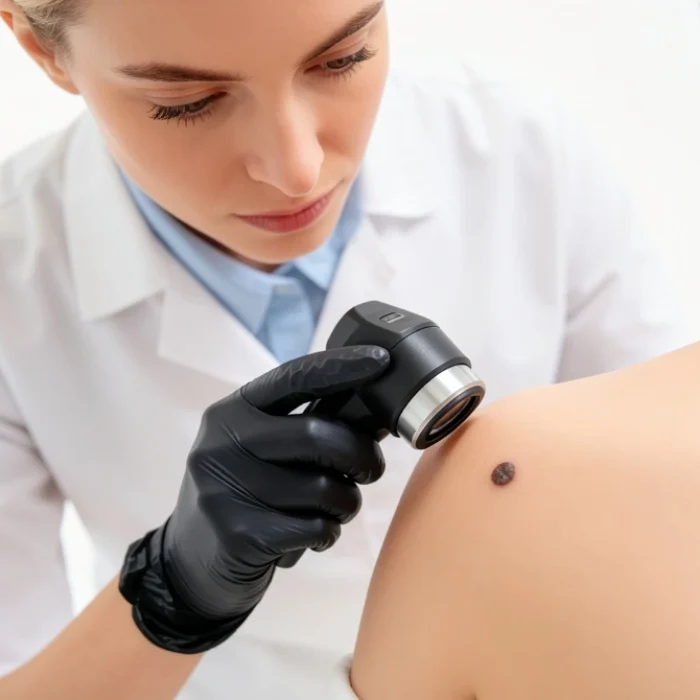
Understanding Skin Melanoma: How to Protect Your Skin and Stay Healthy
Our skin is more than just what we see in the mirror – it’s the body’s largest organ, acting as our first line of defence against the world. Yet, one of the greatest threats to it is something almost invisible: ultraviolet (UV) radiation from the sun. When protection is neglected, this invisible danger can lead to melanoma, the most serious form of skin cancer.
What Exactly Is Melanoma?
Melanoma is a malignant tumour that starts in the melanocytes – the skin cells responsible for producing melanin, the pigment that gives us our skin colour and protects us from UV rays. Unlike other forms of skin cancer, melanoma can spread rapidly to other parts of the body if not detected early.
Although anyone can develop it, people with lighter skin tones, freckles, or a history of sunburns are at greater risk.
Signs You Should Never Ignore
The good news is that melanoma is visible — you can sometimes spot it simply by paying attention to changes on your skin. Dermatologists often recommend remembering the “ABCDE Rule”:
A – Asymmetry: one half of the mole looks different from the other.
B – Borders: irregular, ragged, or blurred edges.
C – Colour: several shades of brown, black, red, or even blue in one spot.
D – Diameter: larger than 6 mm (about the size of a pencil eraser).
E – Evolving: a mole or skin lesion that changes in size, shape, colour, or appearance over time.
Why the Sun Is Both Friend and Foe
UV radiation is divided into:
UVA (320–400 nm) – penetrates deep into the skin, causing ageing and contributing to cancer.
UVB (290–320 nm) – causes sunburns and direct DNA damage.
UVC (200–290 nm) – fortunately blocked by the ozone layer.
Excessive sun exposure, particularly between 10 a.m. and 4 p.m., can be harmful – even on cloudy days, about 60% of UV radiation still reaches your skin.
Sunscreens: Your Daily Armour
Here’s what to look for:
Broad-spectrum: protects against both UVA and UVB.
SPF 30 or higher for everyday use; higher if you spend long hours outdoors.
Water-resistant if you swim or sweat.
Apply 20–30 minutes before going out and reapply every 2–3 hours or after swimming.
Popular physical filters include zinc oxide and titanium dioxide, while chemical filters often use ingredients like avobenzone, octocrylene, and oxybenzone.
Smart Sun Habits
Sunscreen alone isn’t enough. For a truly effective defence:
Seek shade during peak sunlight hours.
Wear wide-brimmed hats, UV-blocking sunglasses, and light clothing that covers your arms and legs.
Stay hydrated – heat and sunshine can dehydrate your skin and body.
Avoid artificial tanning booths – they emit UVA and UVB rays, increasing cancer risk.
Modern Treatment Options
If detected early, melanoma is often curable, primarily through surgery to remove the affected tissue. In advanced stages, radiotherapy or chemot
The Role of the Pharmacist
Pharmacists are often the most accessible healthcare professionals in the community. Beyond dispensing medicines, they play a key role in promoting sun safety, advising on proper sunscreen use, and recommending skincare productssuitable for each skin type. Their guidance helps people prevent damage rather than treat it later.
In Summary
Melanoma remains one of the deadliest forms of skin cancer — but it’s largely preventable.
Protecting your skin doesn’t mean avoiding the sun altogether; it simply means being smart about exposure. Regular sunscreen use, awareness of suspicious moles, and healthy daily habits can dramatically reduce your risk.
So next time you head outdoors, think of your sunscreen as much more than a cosmetic product — it’s your lifelong investment in healthy, beautiful skin.
Disclaimer: This article is for informational purposes only and does not replace professional medical advice. Always consult a dermatologist for personalised recommendations.